Monday, February 27, 2012

Pokemon Yellow


The Short


Pros 
- Keeps the same, addicting gameplay found in its siblings, Pokemon Blue/Red
- Graphical improvements over its predecessor
- Follows the anime series by giving you a Pikachu to start, unlike any other game in the series
- Is the only game in the series where it is capable of getting all three starters of the generation without trades (Charmander, Squirtle, Bulbasaur)
- Pikachu follows you around and can be talked to, and his mood influences certain aspects of the game
- Improved compatibility with the Game Boy Color
- Starting with an electric Pokemon makes the first portion of the game much harder, which I am totally fine with
- Some very small gameplay tweaks refine certain aspects from Blue/Red

Cons
- At its core, this is still Pokemon Blue/Red, with all the same problems as the first games
- Still no damned XP bar
- You can't catch any Pikachus or evolve the one you have into a Raichu
- Has a Pikachu's Beach minigame which is...just there
- Doesn't add any new pokemon at all
- Might be seen as just a money-maker, cashing in on the popularity of the anime at the time

The face that booted a franchise

Note: I will not be going over the basic mechanics of the Pokemon games in this review, as I have covered these mechanics extensively in my Pokemon Blue/Red review. Instead, all subsequent reviews will instead focus on the changes made to the formula in any particular iteration. 

The Long


It's 1999. Year of The Matrix. Year approaching Y2K. And absolutely the year of the Pokemon. Pokemon Red/Blue are selling like crazy, a start of a blockbuster franchise that can only be compared these days with something like the boom of the Angry Birds games. Nintendo still has a year before the next generation of Pokemon, Gold/Silver, will come out, and it needs to keep its fans happy. The Pokemon anime has taken off big in both the US and Japan, and so Nintendo hatches a plan.

Pokemon: Yellow Version (also known as Pokemon: Special Pikachu Version) is that plan. Taking Pokemon Red/Blue and retooling it so that it better fits with the plot of the anime, Nintendo pushes Pikachu to the forefront of the franchise as its now-easily recognizable mascot, and dedicates an entire game to him. So is this game - which is basically just Red/Blue reskinned - just a cheap cash-in on the anime?

No. In fact, I'd go so far to say it was superior to Red/Blue by a longshot.

Pikachu, catching some sick waves. 

The main difference between Yellow and Red/Blue happens at the very beginning. In Red/Blue, you get to choose which Pokemon you start with, a tradition that carries on into every other Pokemon game to date. You get a fire, water, or grass type pokemon, and your rival (whom you battle throughout the game) will pick whatever your weakness is. In Pokemon Yellow, however, you always start with a Pikachu, and your Rival always starts with an Eevee. It's worth noting that Eevee's are a unique pokemon in that they start with the Normal (aka neutral) type and can evolve into many different types depending on how you go about it (an electric, water, or fire type in Generation I). So your rival pretty much got a way better deal than you, getting a bum Pikachu.

Choices are for tools, anyway. 

This actually makes the game a bit harder, if only because the first gym is a Rock type, which is completely immune to electricity. Sure, electric pokemon and fire pokemon can be hard to find in the wild, but that doesn't mean you have to start with them. The bump in difficulty is actually greatly appreciated; I always thought the Pokemon games were too easy because they start you off with such accessible types. Start me off with something weird, like Psychic or Bug or Ghost or something. But they never do, except this game. So that's unique. 

Suck it, stupid Eevee. 

What is really cool about this version, though, is the fact that (like the anime), your Pikachu won't stay in a pokeball. Instead it'll follow you around so long as its in your available roster, journeying with you to the ends of the earth if necessary. You can also talk to your Pikachu at any time and gauge his happiness, which can be used a specific locations to earn rewards or for specific plot...things.

I'd like to say how I think this is a really good idea for a second. The whole idea about Pokemon is you setting out on a journey of discovery and personal growth in an attempt to be the very best, like no one every was. Having a companion with you (who also fights for you) who has feelings and tags along is really neat. It helps sell the adventure more, because these monsters are no longer just guys that pop up in menus or in battle, they are actually there with you. I felt much more immersed in this game than I did with Red/Blue because it felt more real (if battling tons of Japanese monsters is "real"). It was an aesthetic changes that I totally agreed with.

They brought it back on HeartGold/SoulSilver (the DS remakes of Gold/Silver) and I really liked it there, too. Then they took it out for Black/White because Nintendo hates me.

Sad Pikachu is sad

There are a few other changes to keep the game more in line with the anime, and almost all of them are for the better. Specific gym leaders (Brock and Misty) have been changed to look like their anime counterparts. The regular Team Rocket grunts have been changed to Jessie and James from the show, including their full pokemon roster. But probably the best part is the fact that, like Ash from the series, you can get all three starter pokemon in this game without needing to trade. For those who don't know: another reason why picking your first pokemon is such a big deal is you can never get any of the others without trading; they just don't show up anywhere in the game. Pokemon Yellow has all three from Red/Blue, and most are fairly easy to get. So if you wanted a dream team of Charizard, Blastoise, and Venusaur, this is the game for you. 

Misty looks a little more like her anime counterpart, sans suspenders

The graphics have seen a slight improvement, and there has been one sound change. Pikachu, instead of making some random noise, instead does a very staticy "PIKA!" sound everytime he goes into battle. I can't decided if this is a good or a bad thing, but it's consistant with the source material, so I'll give it that I guess. The graphics, as stated, are generally the same, though it does look a lot better on a Game Boy Color than Red/Blue. Since it wasn't designed for the color system, the Game Boy Color has to sort of guess which colors go where, and it seems to do better on this game than the others. It still looks pretty bad, but at least Pikachu is consistently yellow. 

There are also a few minor changes made to the gameplay that aren't worth mentioning (like you can finally teach Charizard "Fly"), because as a whole it's still the same game as Red/Blue. No new pokemon have been added (though this one has probably the best mix of optional pokemon out of the trio), which is a bummer, and there has been no UI improvements. Yep, still have to go all the way into the menu to see your XP. How obnoxious.

Here's some more Pikachu surfing because, why not? 
As it stands, Pokemon Yellow is probably the best out of the original Generation I Pokemon games. While  it is obviously pandering to fans of the anime, the changes are all welcome ones, and all improve upon the original's solid formula. I still think having a Pikachu that actually follows you around was the main reason I liked this game so much, because I really felt like I was a Pokemon adventurer, much more than I had with Red/Blue. It might be stupid, I know, but this is one of my favorite versions of Pokemon, and if you are looking to revisit the first Generation on its original hardware, this is probably the one to do it with.

It still has the same issues as Blue/Red, but...come on. It's Pikachu. How could you say no?

Four out of five stars. 

Come, trusty Pikachu! Let us go forth and...wait, is that old guy dead?!

Pokemon Blue/Red

Pokemon Red/Blue Versions

The Short


Pros
- 150 Pokemon to capture and battle (no, not 151. You can't catch Mew without cheating. Trust me.)
- Surprisingly deep JRPG with a heavy emphasis on elemental weaknesses and attacks
- Hella tight music, even for the tinny GB speakers
- Hunting down and trading for every last Pokemon is addicting and fits that obsessive-compulsive need
- Idea of creating your own journey to become a Pokemon master is compelling, enough so that they reuse it for every future game in the franchise
- Creating the "perfect team" with the right combination of types and moves can consume your life

Cons
- Lack of an XP bar means you have to go to the menu to check levels every time
- Catching them all means having a friend with a GB and a link cable to trade, since the monsters are limited based on version
- HM moves can't be deleted except through a rather tedious process
- Lacks the depth of future games since it doesn't have breeding, day/night cycle, etc.
- A few cumbersome UI choices
- Game Boy Color doesn't really color it well
- Game really isn't that difficult until the very end
- Status effects are always stacked against you
- In the original version, Psychic Pokemon were virtually invincible
- Like all the games, Pokemon is a serious test to your level-grinding patience


The intro that started it all


The Long

You know what Pokemon is. Even if you've ever played it, even if you can't tell a Zubat from a Pidgy, and even if these new-fangled "pokemans" are clearly inferior to the original 150 you caught as a kid, everybody knows what Pokemon is. I'm pretty sure most people in this country can recognize a Pikachu on sight, have heard the phrase "Gotta Catch 'Em All," and know that in the Pokeworld a Gym is not a place you go to work out. Yu-Gi-Oh came and went, Digimon had a run and sort of faded, but Pokemon persists. And you can laugh or scoff all you want at this "kid's game," but there is clearly something here that has compelled literal generations of kids to play it. Think of it this way: Pokemon Red/Blue came out in 1998. That's fourteen years ago. That's long enough for someone to grow up, get married, have their own kid, and start teaching them to be a Pokemon master. That's insane. 

As someone who experienced Pokemon from start to finish (I was 12 when the phenomenon came crashing over to U.S. shores), I have no shame in saying I think these are all fantastic games. I never got so deep as to the whole breeding/secret stats thing of the later versions, but I did "Catch 'Em All" with the first two generations (never to happen again), have played every single generation and several spinoff games, and even watched the first two seasons of the anime. Yeah. I can sing the entire first-season Pokemon anime theme song by heart, even now. I'll admit that aspect of all this is a little sad. 

TO CATCH THEM IS MY REAL TEST, TO TRAIN THEM IS MY CAUSE


Anyway, the point is that I love the crap out of Pokemon, even though I'm twenty-six and married and should probably be doing something better with my time. If you've ever been on the fence or just thought they were stupid kids games (the franchising of it and marketing it as such probably didn't help that interpretation much), then guess what. I'm here to convince you otherwise

So enough of me rambling and let's get on with this review. 

Let the battle begin

Pokemon starts off simple. You are a young boy living in Pallet Town, and whenever boys (and I assume girls) reach a certain age they are set off on an adventure to become a Pokemon trainer. It's a sort of "rite of passage" thing into adulthood, I'm assuming, because after that they either become a Pokemon master, or just a normal like...shopkeeper. It's actually an interesting analogy about pursuing your dreams, because everybody leaves Pallet Town thinking they'll be champion, while your journey is filled with people who have essentially given up. Since it's an open world, you can technically give up at any time and just wander around normally, but if you want to be the best it's a lot of work and a lot of failure. I'm probably digging to deep into this, since there's really no actual story to speak of, but since the goal of it is to allow a player to write their own Pokemon journey, that's mine.

The essential goal is to beat a set of eight Gym leaders (bosses) along the way, then go kill the Elite Four and the Champion in one final blow. The first eight can poise a slight problem if your team isn't great, but the game gets mad hard once you hit the Elite Four, which adds a chunk of gameplay. That's basically the goal of Pokemon. Simple, but I'm fine with that. 

JRK is well on his way to being a Pokemon Master

You are given a choice between three starters: a fire-elemental type (Charmander), a water-elemental type (Squirtle) and a grass-elemental type (Bulbasaur). They might as well had called them "Hard, Medium, Easy" respectively, since that's essentially how it works, though once you get in the second half of the game it becomes kind of a moot point. 

So you pick your Pokemon, grab your balls (Pokeballs) and your journey begins. There's a bit where you have to overthrow a corrupt Pokemon gang called Team Rocket, but the story is pretty much 1. Get stronger and 2. Beat up everybody who so much as glances in your direction. Simple stuff.

Charmander, bringing 'da heat

How to accomplish both 1 and 2 above requires you to catch more Pokemon. You can have as many as you want total, but you are limited to only having six on your team. Pokemon are also assigned a unique element, which each has their own specific weaknesses. Simple ones are that fire is weak to water (meaning the Charmander above is screwed if the Squirtle knows Water Gun), while others get more complex (Psychic is weak to Bug, Strength is weak to Psychic, etc.). The basic elements of this first version are Normal, Fire, Fighting, Water, Flying, Grass, Poison, Electric, Ground, Psychic, Ice, Bug, Ghost, and Dragon. Knowing and mastering these strengths and weaknesses is probably the biggest key point in the game, and being able to actively attack and defend against any of these types requires you to have a perfect team. Pokemon can also have hybrid types (for example, Charizard is a Fire/Flying), with a main type and a side type. These weaknesses can stack and so can strengths (so since both fire and rock take 2x damage from water, a fire/rock Pokemon would take 4x), meaning you have to be very careful in who you pick and who you send out.

You also aren't limited to just your own elemental powers, since moves themselves are assigned elements as well. Your Pokemon often stay reasonably within their assigned class type when they learn moves via leveling up, but you can acquire special items (TMs) that teach moves that can mix things up. Some of the most valuable Pokemon (the dragons), are awesome because you can teach them from a massive pool of elemental type moves. Unlike the Pokemon, however, moves can't have multiple types. 

Seriously, it's a lot to remember. 

And then the clincher: you can only have four moves at a time, and if you forget a move it's gone forever (except if you fulfil a very specific set of requirements and for just one Pokemon). So when you are making your team of awesome, you have to be careful to not screw it up. This can be a big pain because of the UI; you don't know what moves do or even what element they are (though you can guess what "Fire Blast"'s element is) until after you either actually learn it or look it up online. This can mean you could seriously mess up your Pokemon if you forgot an essential move. You can fix this most of the time by catching another one (if it is a catchable type) and fixing it later, but it still is an annoyance.

You also have to choose whether to evolve your Pokemon (which makes them tougher but they learn moves slower), or leave him where he is (where he stays weaker but can learn better moves at a faster rate)

So how do you form this Poke-team? You gotta go out there and catch them! While the battle mechanics of Pokemon can be extremely complex, the actual system themselves is traditional turn-based JRPG. You wander around in tall grass (or get spotted by another trainer) to start a battle. Once in it, you take turns attacking based on the various Pokemon's speed stat (and there are, of course, moves that buff or debuff). You can also spend a turn to take a Pokemon back and send another one out, earning the newcomer a free hit from the enemy. After you've beat the everloving crap out of the other guy (but not enough to kill him, just barely), you can throw a Pokeball and pray (holding Down+B also helps). If you are lucky, you catch the wild Pokemon and he becomes yours FOREVER. If you fail, you can keep throwing with the hope that you'll get it, while the wild Pokemon gets a free hit on your guy every time you fail. 

Somebody actually figured out the math for this. Freaking insane.  

Which brings me to a big complaint (and one that continue throughout the series): catching Pokemon is both exciting and immensely frustrating. Yes, you can buy better Pokeballs that have a better chance of catching. Yes, there are moves that drop an enemy HP to 1 (though False Swipe wasn't introduced until Generation II, so it isn't in this game) and not 0, which is ideal for catching. But missing ten Pokeballs in a row or accidentally hitting an rare Pokemon down to 0 so the battle ends instead of giving you a chance to catch it is infuriating. Considering it's trying to take regular RPG mechanics of "dealing damage" and applying a requirement of precision from them is really obnoxious. 

If you win the battle, every Pokemon who participated gets an equal cut of the XP (which makes a viable strategy to put your low-level Pokemon first, swap him out at the start of the battle for a good one, and then the two share the final XP). Another pain in the butt for the Red/Blue generation is the lack of an XP bar in battle. It gives you the numbers, sure, but in order to actually see how much XP you need to a next level you have to go through the menu to the specific Pokemon to check. It's an annoyance that was fixed in Gold/Silver, but it still really hurts replaying this game again now, in 2012.

Choose wisely. 

The level grinding also gets pretty insane. Since each Pokemon has to level individually, and Pokemon you catch are usually weaker than your current party of six, every time you get a new Pokemon you are signing up for another 10-20 minute grindfest to get him up to par. Again, this can be done via the swap trick (or the Exp Share item in later versions), but it's still tedious. There are also Pokemon that become completely obsolete by the end of the game (read: all Bug Pokemon), so if you heavily invested in them once they hit level ~30 you'll realize they...kind of suck now. Time to catch a new one, I guess. 

Luckily the Pokemon get stronger as you go along, meaning it isn't that bad, but expect to spend a lot of time running back and forth in tall grass as you level grind your Squirtle up to a Wartortle. 

Pikachu has lost some weight since this first game

Another major annoyance is the HMs. Now, in order to make sure you don't just run out and get mutilated by some Lv 40 Ponyta from the start of the game, Pokemon gates your progress with the Gyms. After you beat the Gyms you are given a move (for example, "Cut"), which you can teach any number of Pokemon an unlimited amount of times, and it lets you interact with it in the real world (in this case, cutting specific trees that block your path). I wish they'd do more with having your Pokemon interact with the real world other than just doing these prescribed things, but that isn't my complaint. 

My complaint is once you learn an HM you are stuck with it forever. You can't delete or replace it from your four-move roster. So if you learn Cut (which is a pretty crappy move later on) with your main guy, you just have a wasted slot for every battle forever. Why couldn't they have gated it with, I dunno, an item? They could have given me an ax and I wouldn't have had to ruin my Pokemon. There are ways around it (getting a junk Pokemon to learn all the HM moves), but that's wasting a whole slot from your party of Six to just get around the damn world. As a bonus, these things come back after you leave the screen, meaning you can't just run to every rock, tree, etc. in the world and blow it up once, you still have to haul your crappy HM Mule/Slave around. It's stupid and extremely annoying, and they still haven't changed it. 

Get spotted by a trainer and you'll be locked into a fight. 

Graphically, Pokemon is a mixed bag. The Pokemon themselves look great, well drawn and their moves also look decent. The world itself is a bit bland, but it's a Game Boy game so I'm willing to cut it some slack. The menus are pretty much just tons of text to navigate, which isn't aesthetically pleasing at all, and they can be extremely cumbersome to navigate (especially since you have to go them to to check your XP GAH).

The music is awesome, even coming out of tinny Game Boy speakers. You'll learn to loathe the battle song, but each city and route sports their own catchy tunes, and they all provide both good background noise and an excellent, memorable tune.


The start of a journey


How does one actually rate the game that started a massive phenomenon that is (more or less) still going fourteen years later? Well, when I started reviewing games I decided to review them based on how I fell now, not on how I felt at the time. At the time this game was freaking incredible, a JRPG introduction for kids that had an insane amount of depth hidden beneath it's simple exterior. Nintendo has improved on (or made slight improvements on, anyway) this formula over the years, and after burning through every Generation I can safely say that this game hasn't aged particularly well. The cumbersome gameplay and UI issues really hold it back, and while those of us with nostalgia will be willing to overlook these flaws, the rose-tinted glasses can only go so far. 

This game was also remade on the GBA with the improvements that had been implemented in the years since its original release, and that version is easily the superior one. Pokemon Blue (my version, screw you Red people) will always hold a special place in my heart for what it is, but considering just how many Pokemon games you have to choose from currently, I can't recommend the original Game Boy game as a jumping off point for this generation of gamers. 

Three out of five stars. Though if we were going off my rose-tinted memories, there wouldn't be enough stars in the world. 

Sunday, February 26, 2012

Week in Review for 2/25/2012 - Pokemon Week


Welcome back, dear reader, and hopefully you survived the horror that was "horror week." We got 10 creepy games reviewed, bumping our game total up to 77 overall. Of course I still have more to review, but we'll see if they pop up during later events.

I'm enjoying sticking to a theme every week, and in celebration to the announcement of the direct sequels to Pokemon Black/White coming out on the DS later this year, I'm going to declare this Pokemon week! I'm going to review every Pokemon generation, and even a few of the odd-balls (such as Crystal or Platinum). But that's not all! I'm also planning on doing all the spin-off games I've played (Pokemon Pinball, anyone?) which should provide some quality content. And before you ask: yes, I've played Hey You, Pikachu! So just keep that in mind.

If by some miracle I run out of Pokemon games before the year ends, I have a few more up my sleeve. Mario 2 (NES) has been in the backburner of requests, as well as Saints Row the Third (which I played religiously this last week), so those might pop up.

RPG week after Pokemon week? Maybe. Mass Effect 3 comes out soon, and that's technically an RPG. We'll see.

Here are these weeks' games, with scores!

Alan Wake - 3 / 5 Stars
Saw - 2 / 5 Stars
Clock Tower: The First Fear - 4 / 5 Stars
Dead Space 2 - 5 / 5 Stars
Plants vs Zombies - 5 / 5 Stars
Silent Hill 2 - 5 / 5 Stars
Silent Hill 3 - 5 / 5 Stars
Silent Hill Homecoming - 2 / 5 Stars
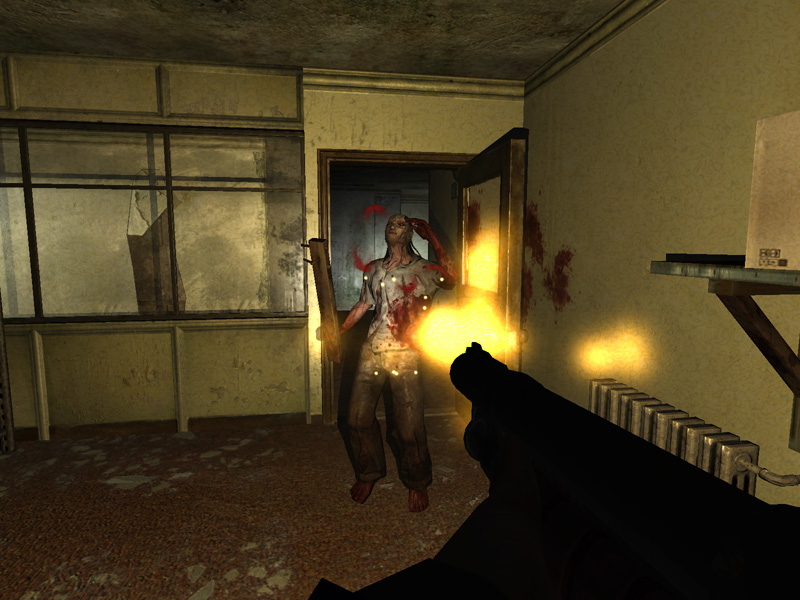
Condemned: Criminal Origins - 3 / 5 Stars
The Darkness II - 3 / 5 Stars

Expect some pocket monster mayhem this week! See you there!

The Darkness II


The Short


Pros
- Same violent, dark, comic book adventure of the original
- New cell-shaded graphics look very good overall
- "Quad wielding" the tentacles and guns is much more responsive than The Darkness
- The world between life and death is better realized/less weird than the first game
- Upgrade tree allows for tons of customization
- Darkling management has been improved to have just one "always on" Darkling
- Four-player co-op multiplayer in the vein of Left 4 Dead
- One of the most fast paced, responsive, visceral shooter I've ever played

Cons
- Takes much of what made the first game great and abandons it for a corredor shooter
- Completely linear; all the open, breathing world elements have been removed
- Default setting to show "score" after killing enemies is annoying, but it can be turned off
- Swearing is gratuitous to the point of absurd
- Bosses are uninspired
- Brian Bloom is not Italian, and his fake accent as Jackie slips frequently
- Story's ending is unsatisfying, corny, and doesn't offer much closure
- Probably one of the most violent, gory games I've ever played, which can turn a lot of people off
- While The Darkness in spirit, it loses the core of what made the first game such a cult classic

The Darkness is back, and more violent than ever. 

The Long


The Darkness was a game that came out of left field, and saw most of its success in the years post-release. A bizarre mixture of comic book supernatural powers, the Italian mob, shooters, and an open-world game, The Darkness didn't do any of these things particularly exceptional, but ended up being much more than the sum of its parts. It is rare that games like these see any sort of sequel at all, considering how it only sold moderately well despite both critical and fan acclaim. When I heard The Darkness II was coming out I was super excited, despite the game being made by a new developer. We were getting more Jackie and Mike Patton as The Darkness, which I was certainly ready for. The graphical shift and improved controls looked fantastic, the game violent and still heavily story-driven.

Now, five years later, we finally can continue Jackie Estacado's dark adventure. So is it a worthy successor?

I guess somebody watched Alien a few time before designing these executions

The Darkness II sees a massive improvement over The Darkness in terms of both controls and what you are able to do with the Darkness powers. In the first game, you only had essentially four Darkness powers, and only one could be equipped at a time. They were all cool but sometimes felt like you were limited considering you were supposed to be essentially a demi-god. Well, The Darkness II addresses this head on.

They coined it "quad-wielding," which might be a little much but is fairly accurate. You can duel-wield guns, with the usual left trigger firing the left gun and right trigger the right. Then you have your Darkness powers. To put it poetically, "I've got mah left one for grabbin' and my right one for slashin'." Left-shoulder does everything with grabs and tosses (be it objects in the environment, doors that need to be ripped out, or even people to be grabbed and executed), and right-shoulder does a slash (defaults to left-right, but can be done up-down with a flick of the right stick). 

And sometimes they work together to brutally murder people. 

It's a system that quickly becomes second nature, and also frees up the control pad. You then have a standard reload and jump button (X and A), and the last two face buttons are set to rechargable powers (a gun-boost and an area stun). It might be tricky at first, but before long you'll be grabbing people while shooting another one, and slashing at a third before executing the guy you picked up a while ago. The game also has a clear indicator for what and who can be grabbed, which is nice.

You are considerably more powerful in this game, to the point of absurdity. In the first game you still took out tons of dudes (mostly thanks to Black Hole, which has been changed to a random pick-up during the standard heart-eating affair) but felt at least a little vulnerable. In this game you really really feel like a god. If you stagger an enemy you'll get a grab, and if you grab them you can always insta-kill them. Insta kills also can net you health, ammo, or a shield, as an added bonus. Two or three hits with the right slash can knock enemies into the air and completely obliterate them, and be upgraded to do area smashes. It's insane how quickly you burn through standard grunts, grabbing everything from chairs to car doors to long poles to tear people to pieces. 

Multitasking quickly becomes second nature, and the versatility makes nearly every encounter a blast. 

These improvements are paired with an new upgrade system. Killing enemies, eating hearts, shooting out lights, or pretty much anything productive earns you dark essence, which you can spend on upgrading your Darkness powers, guns, and just about everything else. Many of these abilities are quite cool, such as eating a heart temporarily putting blades on your tentacles, to full body armor for when you are standing in the dark.

There is a downside, though. By default, killing enemies pops out the "name" of how you killed them, paired with a "score" (the soul essence you burned). It reminds me a lot of Bulletstorm, but in that game it made sense in the context of the story. In The Darkness II it just seems stupid, like a bunch of words and numbers just showing up to accompany every kill. Luckily you can turn this off, which I highly suggest doing before you even start up the game.

The new batch of enemies do well to counter your newfound prowess

The game isn't a cakewalk, though it is easier than the first one, even on the hardest difficulty. The enemies you are fighting in this game are aware of your Darkness powers and weakness to light, and they plan accordingly. You have characters carrying around high-beam lights to cause your Darkness powers to wane, flash-bang grenades, enemies with shields, and teleporting enemies that can't be grabbed as easily as others. The teleporting enemies are super-obnoxious and can take a while to kill, but the rest provide a good foil to your powers and keep you from just ripping through everything without difficulty. 

I also really dig the new, improved graphics. A lot of people complained because the new graphics were "comic booky" cell-shaded rather than the plastic, "realistic" look of the first game. I think it looks fantastic, especially the use of vibrant colors frequently. It is a sharp contrast with flash effects, and I think it looks fantastic. Aside from some small niggles (what happend to Jackie's hair? It looks like a plastic wig!), the graphics are game.

The same can't be said for the voice acting. Jackie was replaced with Brian Bloom. Now, Brian Bloom is a great voice actor, one of the best. But he isn't Italian, and this sort of gruff, dark, world-weary character isn't his usual gig. His accent sounds fake at best, slips frequently, and just doesn't match the caliber of the original actor. It's fine, but inconsistant. The rest of the voice cast is very good, so as a whole I can't complain too much.

Bladed-tentacle looks awesome.

Despite this being a very solid game, there is one major problem I had with it: it's a linear, corredor shooter. You simply go from point A to point B, killing everybody along the way, and then often fight a lame boss after a few chapters. Sometimes you are dropped off at your mansion for a bit of "open worldly" elements that essentially boil down to walking around and talking to people before going to the next mission. There are also no such thing as side-missions, no side jobs to complete, no side-stories, nothing of that sort. You have a single goal, and you move forward to accomplish it. While the open-world elements from The Darkness were hardly the best open-world bits from any game, they made it unique and cool. Cutting them makes this feel less like the first game and more like a Call of Duty with tentacles. 

The story is also considerably weaker this time around. It tries its damndest to invoke the emotional resonance that stuck with fans of the first game (the "Jenny" scene from the first game is probably one of the most shocking in any game I can think of), and the new enemies are technically more imposing than Uncle Paulie from the first game, but as a whole it hardly stuck with me nearly as much as The Darkness had. Perhaps the linearity made my investment in the world less, or perhaps the fact that we are no longer dealing with the origins of the Darkness makes it less interesting, or perhaps because the ending is so completely stupid and predicable but still lame I'm just left thinking that something went wrong here. I'm not looking for a particularly deep experience, but it seems like the creators of this sequel played The Darkness, figured out most of what made it good, but missed the part where it was all the little things that resonated. Picking and choosing these bits (story and gameplay) works to a point, but it makes it less special and more generic. 

The loading screen monologue segments are back, and they fit in better with the story chronologically

The game also has a new multiplayer mode which is neat in concept, but a little bland in execution. Essentially a ton of co-op missions, you can get up to four friends ala Left 4 Dead style and blast your way through a bunch of dudes and shoot out some lights to win. You play as four characters that apparently have been touched by the Darkness but don't have its full power, meaning it isn't nearly as fun as the main game but I suppose they had to do that for balance. The missions themselves tend to be of the "clear out this area of bad guys" variety, over and over again, which is fun for the first bit but gets boring quite quickly. The four characters are unique and have their own skill trees, which is nice, but this diversion probably won't last you very long before you get bored of it.

Which is actually pretty bad, because the single-player story is short. I beat it in a single afternoon, from 1:00 - 5:00 pm. You do get a New Game + mode, which is awesome, so I started it over again on the hardest difficulty for a second run, which will probably add me another five odd hours, counting what I spend in the multiplayer. But considering you can beat this game and be done with it in four hours, as a value proposition this is pretty bad. The Darkness was 10-20 hours long and the majority of those hours were fun. The Darkness II is four, and it's a total thrill-ride the entire time, but it still seems to end just when the momentum is picking up.

The Darkness II isn't a bad sequel, just an uninspired one. 

The Darkness II is not a bad game. It just isn't a real sequel to 2007's The Darkness. Most of what made the first game unique and special has been stripped away, and while what it has been replaced with is excellent, it lacks a soul. The four to five hours you'll spend slicing, grabbing, ripping, and shooting your way through hundreds of enemies is an absolute blast, and I couldn't recommend it more. But it's over too soon, the multiplayer offering is mediocre at best, and for those invested in the characters and the world won't find much here to grab a hold of. The Darkness II is an insane, awesome game. It just couldn't live up to the magic of its predecessor. 

I still really suggest picking it up if you liked the first game and enjoy shooters, or if you simply like extremely fast paced, visceral shooters that try something new while still being familiar. It's certainly some of the funnest four hours I've spent in the past several months, I just wish there was more to it (both content-wise and design-wise). If you can grab it for $20-30 and like the first game, you should grab this for sure. However, I really think everybody should rent it. I got it for free for one day from a Redbox promotion, and got my fill of it in a single weekend. 

When weighing both its flaws and improvements, I'm thinking a three out of five is a fair rating for The Darkness II. I don't like it as much as the first game, but it's a different kind of like, regardless. If you are a shooter fan or a Darkness fan, this should be a no brainer.

Besides, Mike Patton's voice acting is still awesome as The Darkness, so you could get it just for that. 

"Jackie..."

Saturday, February 25, 2012

Condemned: Criminal Origins


The Short


Pros
- Gritty, violent fusion of horror and criminal investigation
- Strikes a decent balance between fighting and investigating
- Combat is first-person melee, something unique for a modern setting
- Story is genuinely creepy and compelling
- Areas are dark, tense, and scary
- Wide variety of weapons with varying stats at your disposal

Cons
- Areas can get a little repetitive, especially at the beginning
- Graphics haven't dated particularly well
- Some parts of the game are so dark you can't see anything
- Certain barriers require specific weapons to get through, which can be annoying
- You kill a lot of hobos without repercussion. Does the city just not care?


Get ready to beat down some homeless

The Long

Condemned: Criminal Origins is an interesting game. Created by Monolith, the dudes who made Alien vs Predator 2, Blood, and F.E.A.R., you could say these guys know there way around first-person shooters. But Condemned isn't a shooter, not really. While it does have guns, Condemned is a first-person melee horror game with some extra CSI-esque detective work. It's a brutal, gritty, and often disturbing game that sinks its claws into you and doesn't let go. 

Crime investigation is fun, though at times knowing what to look for can be frustrating

Detective Ethan Thomas is having a crap day. Hot on the trail of a serial killer called the "Match-Maker," another serial killer (creatively titled "Serial Killer X") shows up to the party. After Serial Killer X kills two cops and Ethan is framed for it, he finds himself both running from the cops and hunting down the Serial Killer X in an attempt to clear his name and stop the murders. It's a crazy game that starts fast and just gets wilder, with plenty of creepy-weird things to keep the story moving forward.

Also, clearing his name apparently involves killing lots and lots of homeless people.

With crowbars. Or anything else he can find that causes blunt-force trauma. 

While the game tries to give some justifiable reasoning for Ethan murdering what must be hundreds of hobos (they are on some sort of drug that makes them super aggressive or something), it just didn't fly with me. It's like the whole Nathan Drake thing in Uncharted: how am I supposed to root for this "good guy" when he's a psychopath? Other games usually give me at least a little justification (it's during a war, your character is actually a psychopath, you are killing wild animals instead of people), but Ethan's bloodlust and total lack of diplomacy is unnerving. Which also makes the "finishing moves" he can perform all the more weird. Ethan is supposed to be a straight cop who got framed, but I have my doubts.

The gameplay is a mix of two things: first-person melee weapon combat and CSI investigations. The first-person combat is actually pretty good, if difficult. Ethan has a block ability, but unlike in most games you can't just hold the block button and magically become immune to all hits. Holding the block only makes him hold his weapon up for a second before pulling it down again (and you can use this to "fake out" enemies, and they'll do it to you too). In order to block you have to have some dang precise timing, or else you'll be taking a hit. Same goes for hitting people. You can power-attack through blocks (and the enemies can do it in return), but during the wind-up you are exposed for a moment. It makes fights a sort of delicate dance, with both you and your enemy being on very level ground. Every fight is difficult and requires your full attention, even when you have full health, which makes the game a challenge from start to finish.

It can, however, get unfair when you have multiple enemies ganging up on you, since you are ill-equipped to fight more than one at a time. Luring them away actually works pretty well, but it did lead to several very frustrating deaths.

You also get to play detective.

The investigation portions are a good break from the continuous, never-ending waves of hobos that want your blood. Essentially you are put in an area and are tasked with finding evidence that will eventually help you prove your innocence. You are given a handfull of tools, and it's up to you to figure out which ones are best for the job. It's sort of a puzzle game during these segments, which is kind of cool since they mix well with the horror element. What isn't cool is the lack of direction. Some you'll figure out quickly, others can actually be obscure stumpers. I'd like to think I'm pretty smart, but I got stuck a couple of times not being certain what I was looking for, and without any hints that was straight up frustrating. They streamlined this in the second game (which worked out better), but for now these are either easy enough that you enjoy them, or obscure and lead to frustration.

You start going sort of crazy, too, and seeing all sorts of messed up stuff.

But what about the horror? This was branded as a horror game from the start, is there anything truly scary about this game? Well, I'm going to say "sort of," and offer an explanation.

Condemned is tense. Not since Resident Evil 4 have I been so worried about what might be around a corner or hiding in the darkness. The game is really dark (in terms of lighting and tone), which means often you'll go to an area only to have a crazed hobo come screaming out at you from pitch darkness. The game's lack of music and adherence to total darkness and silence make these encounters nerve-wracking, and since the enemies can be so difficult you are constantly afraid of what might be around the corner. 

So it's tense. But is it scary? Well...a little. I guess. It does do a lot with its environments (though these scary encounters are bordered by a lot of "same" looking places), and the visions help with the weirdness and creepiness. But if I had to be completely honest I'd say it's more a suspenseful game than a scary one. Scary games get under your skin, give you nightmares, make you wish you weren't seeing the things you were seeing. Suspenseful games have you worried for what might kill you or come next, but once you turn the game off you aren't still thinking about it. Condemned has suspense in spades, but it isn't really very scary. Which is fine if that's what you want (I'm all for it), but just keep in mind this is no Silent Hill. 

There are a few guns, but they have very limited ammo. You can flip them around and use them as clubs, though. 

A few other problems drag the experience down. Often you'll find barriers, be they doors or boards or something like it, that require specific melee weapons to break down. This feels particularly "gamey" to me and really breaks the immersion. Having to backtrack (slowly, because Ethan would lose a footrace with a turtle) across an area to find the required item that you know is around somewhere because this is a game and it wouldn't let you get stuck isn't fun, it's tedious. Why can't he just use the metal pipe to force the door open? Whey does he have to get a crowbar? 

The environments also tend to get very repetitive very fast. They do well with darkness to keep the suspense up, as well as throwing a few unique creepy touches along the way, but as a whole a lot of this game just looks the same. It's very gray, very dark, and very similar. It does mix up a little near the end, but for the most part I didn't really feel like I was making much progress because every room and stairway looked so similar. 

The graphics have also not aged very well. This game was a showcase for the Xbox 360 as a release title, but all these years later we see time hasn't been kind to it. Character models look a little weird and "plasticy," effects like fire are weak, the flashlight and lighting isn't all that great, but the biggest offender is (again) the environments. Monolith tries and does alright for the time I suppose, but most of the walls look like the same uniform texture, and since it's that bland "stone gray" for 80% of the game I got really tired of looking at Condemned's ugly face. 

For the time, though, this game looked pretty good. 

Condemned: Criminal Origins is still totally worth playing, as is its sequel. It does something very few games have tried: make a modern-setting melee-based first-person horror game with detective elements and a billion hobos. For that alone (and the fact it's extremely intense) you should check it out. Just be sure and sort of squint a little; those graphics aren't going to upgrade themselves.

If you can grab it for $10-$15 I'd say you got a decent deal. It's still a fun horror game despite its age, and the sequel Condemned 2 is also pretty good. 

Three out of five stars. 

Friday, February 24, 2012

Silent Hill Homecoming


The Short


Pros
- Controls are vastly improved; tank controls are gone
- Combat is improved, which is good in a way (more on that later)
- Soundtrack is fantastic, as usual
- Many monsters, especially bosses, are horrific and disgusting
- Story actually sort of makes sense
- Graphics are pretty good
- Transformation to "Nightmare World" are some of the best looking in the series

Cons
- Much more of an action game than any other game in the series
- Flashlight sucks; swear they did this to make it "scarier"
- While the story makes sense, that doesn't stop it from being stupid
- Abundance of gore and disgusting kills makes this feel more like Saw than Silent Hill
- While it tries to emulate the original feel of the Japanese-made Silent Hill games, it feels more like they only understood it on a rudimentary level
- Recycles monsters from previous Silent Hill games, completely missing the point of some (read: why is Pyramid Head in this game?)
- Not scary, actually gets boring, and all the scares are corny "jump" scares
- Ending is determined by completely unrelated binary decisions which can accidentally get you the UFO ending on your first playthrough (added by Paul)

We are again taking a trip to Silent Hill

The Long


Silent Hill Homecoming is the second Silent Hill game made by an American designer rather than a Japanese one, and the first not on a handheld to completely drop the numbers from the title. I remember the team Konami hired to make this game frequently pointed out how they "got" the Silent Hill franchise, as sort of a comfort to fans who were worried about the direction the series has been taking over the past few years. And while it's true that some of the more superficial elements of the Silent Hill series remain intact here (foggy cities, nightmare world, nasty-weird monsters), at it's core Silent Hill Homecoming fails on nearly every level at being a Silent Hill game.

The story actually makes sense this time around. You play as Alex Shepherd (no relation to Commander Shepherd of the Mass Effect series), a soldier who is discharged and sent back home to Shephard's Glen. He goes back to find his brother and father are missing, his mom has gone kind of crazy, and the town is covered in a mysterious fog. Of course nasty monsters are involved, and eventually he ends up in the titular Silent Hill, where he discovers some pretty crazy (if somewhat predictable) things about his past and who he actually is.

Like I said, the story makes sense, and isn't marred by bad translation or anything like that, but that doesn't make it particularly interesting or exciting. The twists are dull, the deaths of main characters have no impact, and I swear you spend a good chunk of your time at the beginning running around and talking to people with nothing scary happening at all. Again, Silent Hill 2 did a lot of this, but Silent Hill 2 also invoked a sense of dread from the very beginning. Homecoming doesn't pull it off, so rather than being "quiet yet tense" moments, most of them are just "silent but boring" moments.

The monster design is a bit "paint-by-numbers" from previous games, but I thought most of them were fine anyway

That actually brings me to the biggest problem with Silent Hill Homecoming, right up front: it isn't scary. At all. It isn't even intense (like Resident Evil 4 was; that game wasn't scary, but it was certainly a tense rush), it's just...dull. Environments, which have always been the biggest cause of scares in Silent Hill games, are boring and unfrightening. If you compared the way the Nightmare world looked in Silent Hill 3 and then at the one in Silent Hill Homecoming (the above screenshot is in Nightmare world), the difference is stark. Gone are the oddly placed wheelchairs, the nasty barbed-wire wrapped around random objects, the strange, twitching monsters in the walls. Instead we get a boring, different-hued version of the regular world. Bland. Considering they now have the power of a more advance generation of consoles, the high-def Silent Hill games could have had some of the most grotesque, twisted, and horrifyingly gritty backgrounds out of the entire series. Instead they go the lazy route, like the developers sort of understood what made the past games good and copied it in the laziest way possible.

They also ripped a lot of stuff (like this enemy) from the Silent Hill movie, which isn't a good thing to draw inspiration from, guys. 

This idea of this being an outsider's interpretation of a Silent Hill game is another massive pitfall. As stated before, it does the Silent Hill 2 thing where there are massive bouts of silence and darkness, with only a few creepy scenes to keep you on edge. This worked in the older games because it successfully combined several primal human fears: being alone, the dark, and being helpless. In Homecoming, you are only rarely alone (it always seems people are tagging along with you for stuff), you never feel helpless because of the new combat (more on that in a second), and...I guess it's dark. But it's a cheap dark. The flashlight in this game is the worst flashlight ever made. In some attempt to bump up scares, they made it so it hardly illuminates everything. Ok, listen, let me tell you what is scary. Having a high-beam flashlight (like in Silent Hill 2 and Silent Hill 3) but at the cost of not seeing anything or hardly anything outside it's beam. That means you are frantically, constantly having to turn to check corners, behind you, and anything else you might have missed. It's that contrast between seeing everything and seeing nothing that freaks you out, because what you are seeing you are paying for with a massive amount of darkness everywhere else.

Having everything be dark isn't scary. The effect is lost. You don't feel like you are actually in the dark, and if you can't see anything it isn't scary. So yeah, you fail Homecoming. Bring a good light back.

The "nurse" design is also ripped from the film, and it made no sense there either. They were a representation of James' suppressed sexuality, a mockery of it. Why are they sporting cleavage and leg for Alex? 

But the biggest kill of tension or any form of fear is the combat. Let me get one thing clear: the combat in the Silent Hill games has always been awful. Your characters have no idea how to fight, handle a gun or a weapon, and it shows. Having to fight down enemies is cumbersome and difficult (which, when combined with Tank controls, makes it even harder). HOWEVER, you may note that while I've complained about bad Tank controls, I never complained about the previous games' combat. This is because it was supposed to be difficult. In all those games, it was a more viable solution to run away (which the excellent Silent Hill: Frozen Memories actually got by eliminating combat entirely) from these monsters, which again added to that helpless feel. When you were really down to the wire you'd have to try and kill the enemies, but I usually spent most time trying to not be noticed and fleeing from the monstrosities. It was really scary knowing there was stuff out there I couldn't kill (which is also why bosses in Silent Hill 3 made no sense).

Alex is an ex-soldier, which means he is well equipped and well versed in combat. The system emulates a Zelda-esque formula of locking on and dodging to fight enemies. He can even block attacks. So, basically, they made this an action game (much like Resident Evil 4 did), only without making the enemies harder. Alex has very steady aim (and the game lets you actually aim with a target, unlike previous entries where your character auto-aims and you pray) and ammo is surprisingly plentiful. So I'm never scared of enemies (even nasty bosses) because my guy is a walking badass. Way to kill the mood.

I actually think the bosses look pretty creepy, and are some of the best designs in the game. 

As a final "they thought they got it but they didn't" example: this game is loaded with depraved, gory moments. Now let me get something clear: the previous Silent Hill games had plenty of disturbing imagery and bloody...blood. But it never resorted to having a dude literally cut in half right in front of you when you were strung up, a woman stretched until she snapped on a Saw-esque trap, or having enemies spray blood when you killed them (though the fact that your weapons leave damaging cuts is cool, I guess, but it sort of doesn't fit with the series' past). While the other games were extremely subtle, Homecoming is a punch in the face. While the other games never glorified in their gore and violence (in fact almost all the main characters abhorred what they had to do to survive), the very nature and design of Homecoming is set up so that you cheer with every bloody smack. The feel is completely wrong, for both a Silent Hill game and a survival horror game in general, and it, again, completely kills any tension or mood that might be had.


Silent Hill 3's mirror room is probably one of the scariest, creepiest, nightmare-fueled scenes I have ever seen in a video game. It's done in almost complete silence, with no combat, and as an extremely slow burn. Comparing that to Homecoming is almost impossible; Homecoming's scenes are extremely amateurish in comparison.

And no, I won't link to Silent Hill 3's mirror scene on video, and you shouldn't go looking for it on YouTube, because finding it on accident in the game itself is by far and large the best way to experience it.

What is this, a Silent Hill high school reunion? Why the crap is he here?

As an aside, Pyramid Head is in this game. I shouldn't have to explain why this makes no sense if you read my Silent Hill 2 review, but maybe I will anyway. The enemies in these games have always been twisted to fit the protagonists. More so in Silent Hill 2 than any others, but it still applies for the rest of the games. It also drops a lot of hints that these monsters might be more in their minds than real (Silent Hill 3 does a good job with this) which means each game needs its own unique monsters.

Homecoming apes enemies from almost every other game in the series, including freaking Pyramid Head, whose sole existence in the Silent Hill mythos was to be a representation of everything James in Silent Hill 2 was not. So him being in this game makes no sense at all. The fact that he plays key roles in the story of Homecoming only further accents the fact that the people making this game have no idea how Silent Hill works. 

And look, skinless dogs. That totally fits the Silent Hill world, and hasn't been in any other horror anything ever. 

As a positive point, the graphics are decent (again, especially the boss monsters), though the poor lighting is another knock off its score. The music is excellent as usual, and is probably the only thing really loyal to the source material. While it's a technically competent game, however, high polygon count and bumpmapping doesn't count when your art design sucks, and this is where Silent Hill Homecoming fails. It's just...so boring to look at. And I swear the enemies don't even twitch right.

There's the mandatory wheelchair. I guess this is a real Silent Hill game now. 

Here's the thing: if Silent Hill Homecoming had just marketed itself as an action/horror game and not a Silent Hill game, it might have actually worked. I'm always willing to cut some slack for new horror IPs (there aren't nearly enough), and even ones that are broken I still tend to enjoy playing (see the Saw video game, which is actually pretty good). The controls are fine, the combat plays well, and even though the game isn't very scary they could have made up for it with the action. The problem here is that they had a pedigree to live up to, and they couldn't even begin to approach it.

As it stands it's more like a Chinese bootlegged version of the Silent Hill series rather than an actual entry. If you like horror action games you still will probably enjoy it, just don't think of it as a Silent Hill game. If you want another game in the same vein as the older Silent Hill games, however, you should probably avoid this. It tries its hardest, but in the end it just can't pull it off. If you must have a modern Silent Hill game, try Silent Hill Frozen Memories instead.

If you read the above paragraph and still want to try it, I'd say $10-15 is a fair enough price. Again, there isn't anything particularly broken here fundamentally, it just isn't a great Silent Hill game.

But since it did put "Silent Hill" in its title, it gets judged as one. So it earns two out of five stars